Jabatan Kerja Raya (JKR) Sarawak, Bentley Systems (Malaysia) Sdn. Bhd., and Digile Sdn. Bhd. have formalised a strategic collaboration through a Memorandum of Understanding (MoU) to accelerate digital engineering adoption and strengthen infrastructure delivery capabilities across Sarawak. The MoU marks a significant step forward in aligning government and industry expertise to support Sarawak’s digital transformation agenda within the infrastructure sector. It reflects a shared commitment to enhancing how infrastructure projects are planned, designed, delivered, and managed through the integration of advanced engineering technologies and structured capability development.
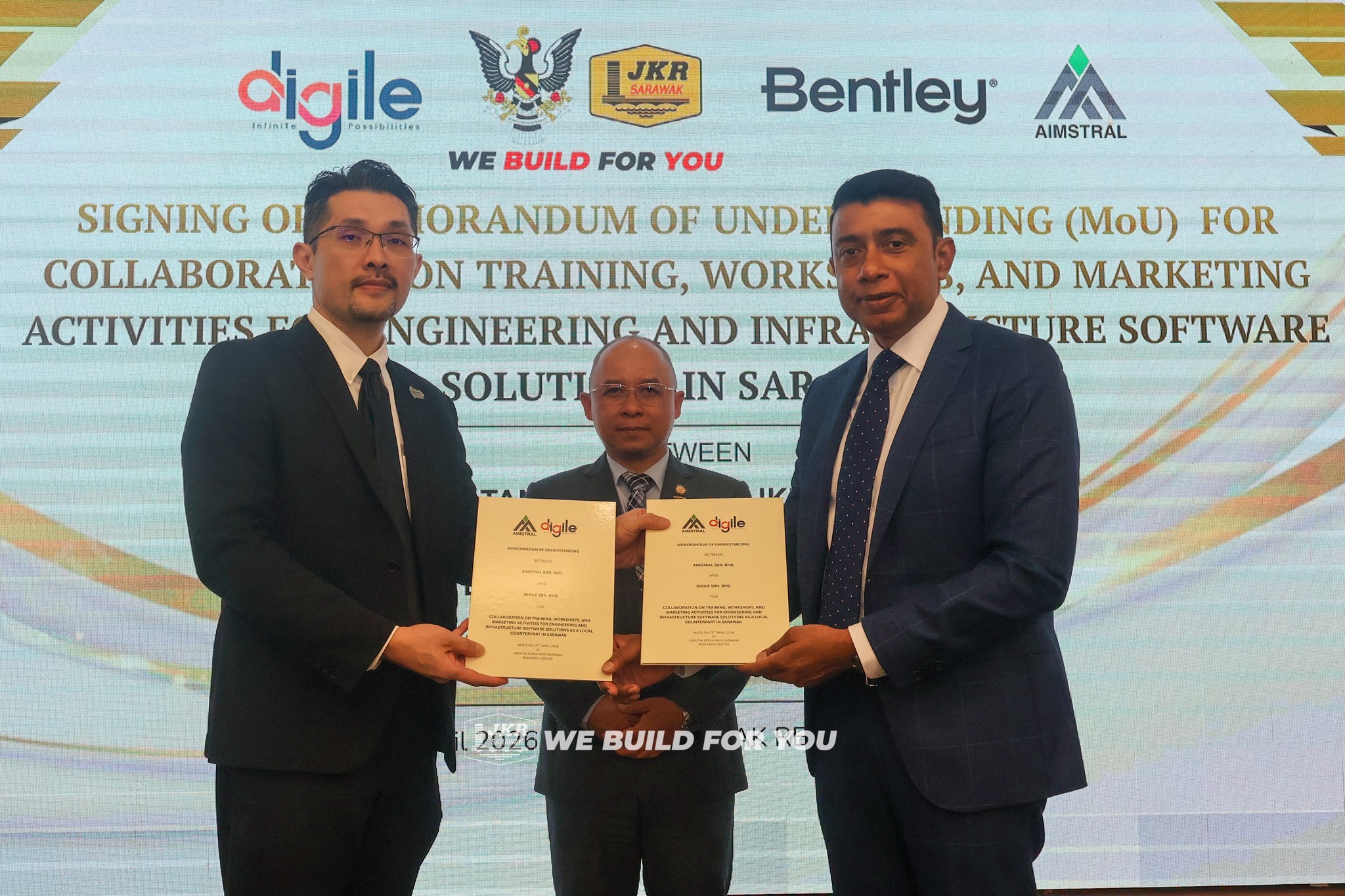
The signing ceremony was held at the JKR Research Centre, Jalan Tabuan on 23 April 2026, witnessed by the Director of Public Works Sarawak, YBhg Datu Adj Prof Ir Ts Gs Br PMr Dr Cassidy anak Morris, alongside Partner Director (APAC) for Bentley Systems (Malaysia) Sdn. Bhd., Jeremy Cordeiro, and Group CEO of Digile Sdn. Bhd., Ravindranath Koka. Concurrently, Digile also signed a separate MoU with the CEO of Aimstral Sdn. Bhd.,Ir. Ts, Gs Daniel Sim, as the local Sarawak counterpart. JKR Sarawak continues its role as the State’s lead agency in infrastructure development, while Bentley Systems contributes globally recognised engineering and infrastructure software solutions. Digile, together with its local partner Aimstral Sdn. Bhd., brings both global expertise and local implementation capabilities to ensure effective delivery on the ground.
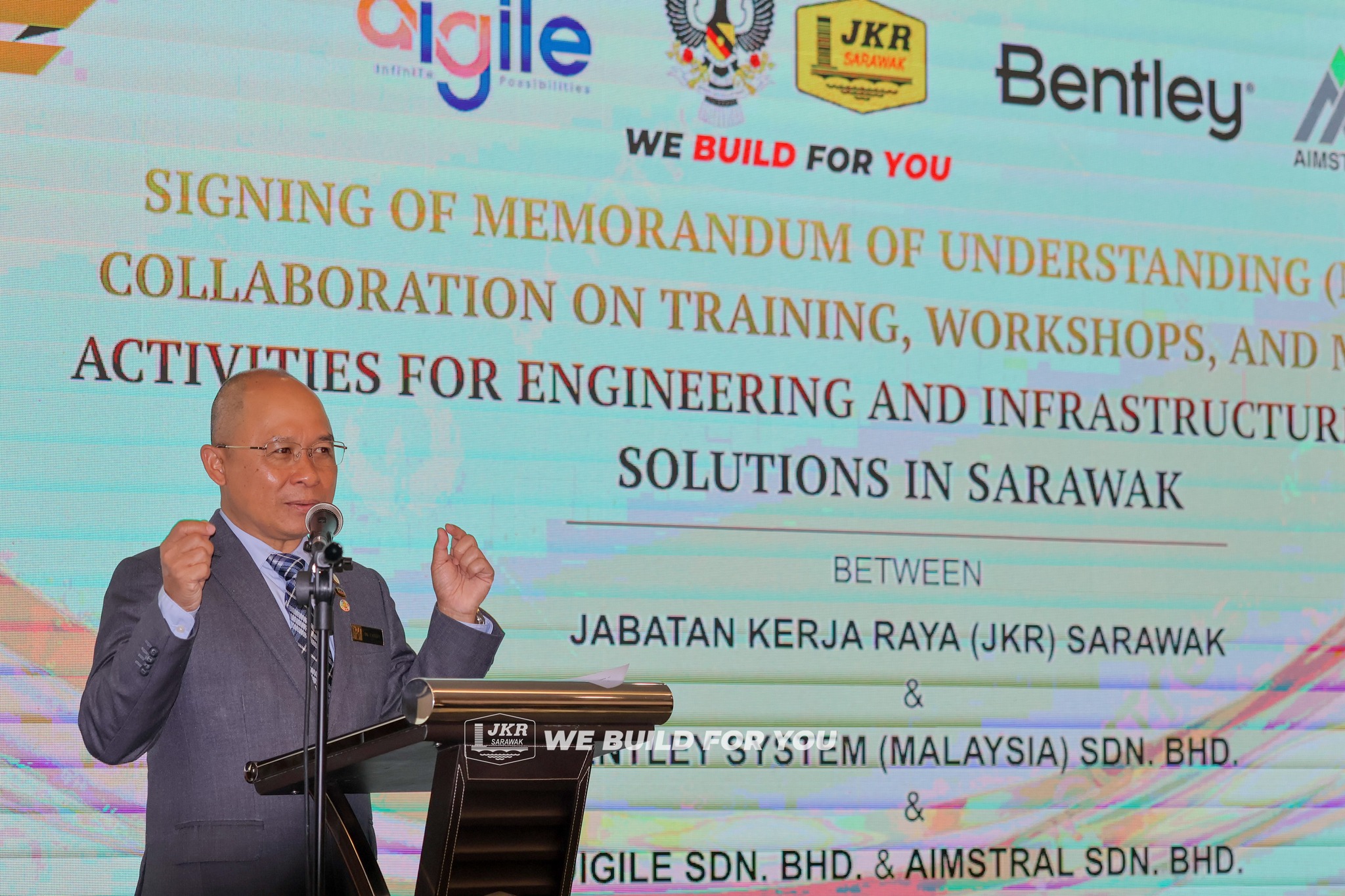
This collaboration goes beyond a formal agreement, focusing on tangible initiatives including technical training programmes, workshops, seminars, and knowledge-sharing platforms. These efforts are designed to strengthen the digital competencies of engineers and technical professionals, while promoting wider adoption of digital engineering tools across Sarawak’s infrastructure ecosystem. Through a structured approach anchored on People, Process, and Technology, the initiative aims to raise the standard of infrastructure delivery in the State. By equipping engineers with the right tools and capabilities, the collaboration seeks to improve coordination, reduce inefficiencies, and deliver projects more effectively—on time, within budget, and without compromising quality. A key long-term aspiration of the partnership is the establishment of a Centre of Excellence in digital engineering within JKR Sarawak. This will serve as a benchmark of best practice, where knowledge is continuously developed and shared, and where digital solutions are applied consistently across the entire infrastructure lifecycle—from planning and design to construction and asset management.
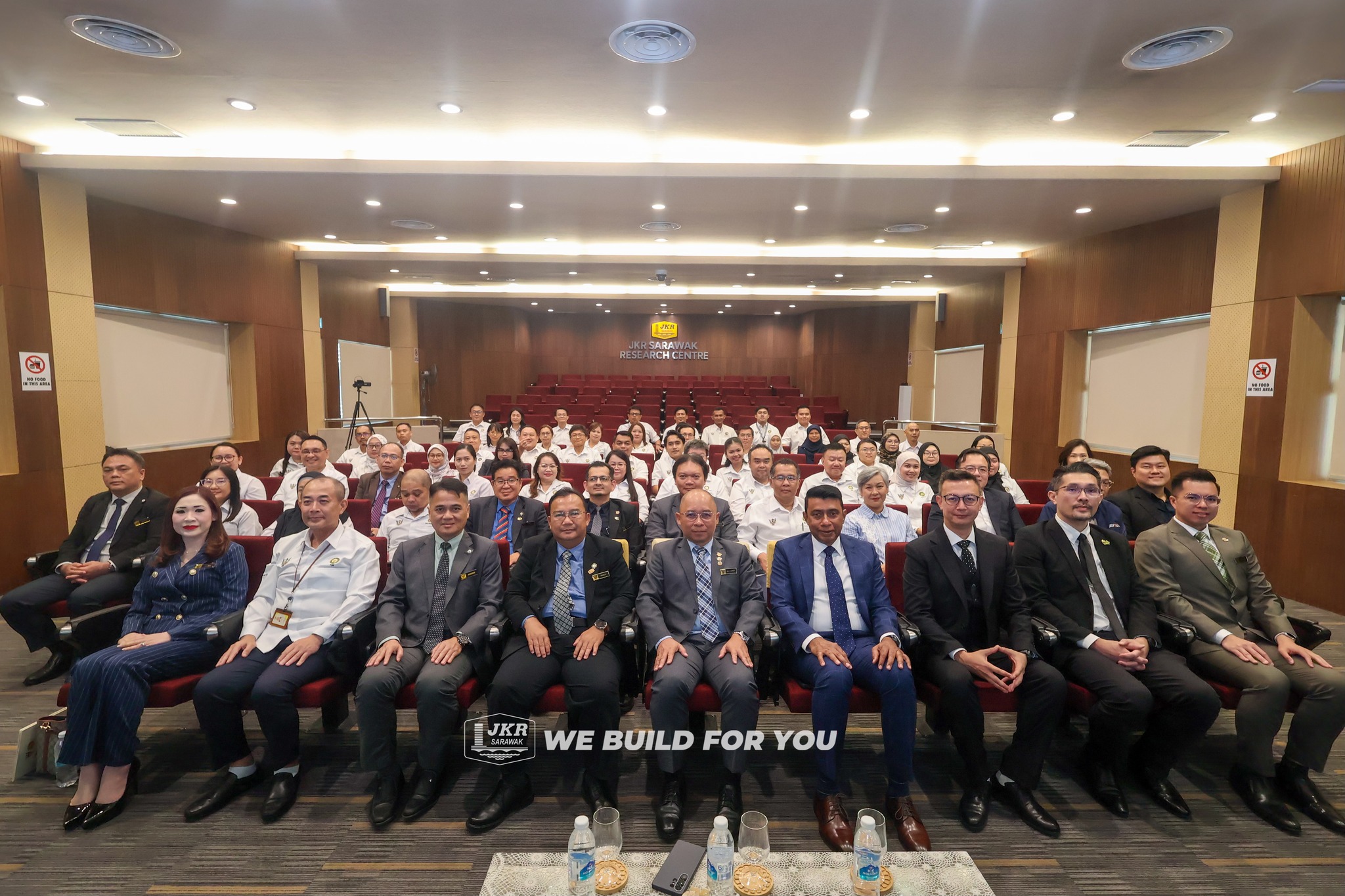
The collaboration is also expected to contribute to broader economic and public service outcomes, recognising that infrastructure remains a critical enabler of development. By digitalising infrastructure delivery, the initiative will support improved efficiency, stronger technical outcomes, and enhanced service delivery for the people of Sarawak. Over the course of the MoU, the parties will work closely to deliver training, demonstrate digital engineering workflows, and implement best practices that can be scaled across projects and agencies. The partnership is expected to result in a more robust and sustainable digital engineering ecosystem, strengthened collaboration between government and industry, and a future-ready workforce.
This MoU represents not just the start of a collaboration, but a clear and deliberate move towards transforming how infrastructure is delivered in Sarawak—through innovation, capability building, and strong partnership.